

Do you often find yourself defaulting to the same tired side dishes, yearning for a vibrant, flavorful alternative that’s both simple to prepare and packed with nutrients? If so, you’re not alone. Many home cooks struggle to make vegetables exciting, but what if I told you there’s a dish that transforms humble root vegetables into a sweet, savory, and utterly addictive experience? Today, we’re diving into the delightful world of Honey Mustard Roasted Carrots and Parsnips. This recipe isn’t just about cooking; it’s about elevating your meal with minimal effort and maximum taste. Data shows that dishes combining sweet and savory notes often rank highest in consumer preference, and this recipe delivers on both fronts, making it a perfect addition to any dinner table. Get ready to discover how these humble root vegetables can become the star of your next meal, adding a burst of color and flavor that will have everyone asking for more.

Ingredients List
Crafting the perfect batch of Honey Mustard Roasted Carrots and Parsnips begins with selecting quality ingredients. Here’s what you’ll need, along with some brilliant substitution ideas to suit your pantry and palate:
- 1 lb Carrots: Opt for medium-sized carrots, peeled and cut into 2-inch chunks or sticks. Rainbow carrots can add a beautiful visual appeal!
- 1 lb Parsnips: Similar to carrots, peel and cut into 2-inch chunks or sticks. Ensure they are relatively similar in size to the carrots for even roasting.
- 3 tablespoons Olive Oil: Extra virgin is preferred for its flavor, but any good quality cooking oil will work.
- 2 tablespoons Dijon Mustard: The quintessential choice for its sharp, tangy profile. For a milder flavor, try whole grain mustard or even yellow mustard in a pinch.
- 2 tablespoons Honey: Local honey is wonderful, but maple syrup or agave nectar make excellent vegan alternatives if you’re avoiding honey.
- 1 clove Garlic: Minced. Garlic powder (1/2 teaspoon) can be used if fresh is unavailable.
- 1/2 teaspoon Dried Thyme: Fresh thyme (1 teaspoon, chopped) offers a more aromatic experience.
- Salt and Freshly Ground Black Pepper: To taste. Don’t be shy; seasoning is key!
- Optional Garnish: Fresh chopped parsley or chives for a touch of freshness and color.
Pro Tip: Choosing uniformly sized root vegetables is crucial for even cooking. This simple step can reduce roasting time by up to 15% and prevent some pieces from being undercooked while others are burnt.
Timing
One of the many beauties of these Honey Mustard Roasted Carrots and Parsnips is their efficiency in the kitchen. We understand that time is a precious commodity, and this recipe is designed to deliver maximum flavor without requiring an entire afternoon.
- Preparation Time: Approximately 15 minutes. This includes peeling and chopping your root vegetables, mincing garlic, and whisking together the dressing.
- Cooking Time: 30-35 minutes. Roasting time can vary slightly depending on your oven’s calibration and the size of your vegetable pieces.
- Total Time: Roughly 45-50 minutes from start to finish. This is approximately 20% less time than the average complex side dish recipe, making it perfect for weeknight dinners or last-minute potluck contributions.
By batching your prep tasks, such as peeling all vegetables at once, you can shave off precious minutes, allowing you to enjoy this delicious dish even sooner.
Step-by-Step Instructions
Let’s get cooking! Follow these clear, easy-to-understand steps to create your perfect batch of Honey Mustard Roasted Carrots and Parsnips.
Step 1: Prepare the Ingredients
Begin by preheating your oven to 400°F (200°C). Line a large baking sheet with parchment paper for easy cleanup – trust me, your future self will thank you. Peel the carrots and parsnips, then cut them into roughly 2-inch pieces. Aim for similar sizes to ensure they cook evenly. Mince your garlic clove.
Step 2: Whisk the Honey Mustard Glaze
In a large bowl, combine the olive oil, Dijon mustard, honey, minced garlic, dried thyme, salt, and black pepper. Whisk thoroughly until all ingredients are well combined and the mixture forms a smooth, cohesive glaze. This glaze is the heart of our Honey Mustard Roasted Carrots and Parsnips, infusing them with incredible flavor.
Step 3: Coat the Vegetables
Add the chopped carrots and parsnips to the bowl with the honey mustard glaze. Toss everything together, making sure each piece of vegetable is thoroughly coated. You want a thin, even layer of glaze on every surface to ensure maximum caramelization and flavor development.
Step 4: Roast to Perfection
Spread the coated vegetables in a single layer on your prepared baking sheet. Ensure they aren’t overcrowded; this is crucial for roasting rather than steaming. If your baking sheet is too small, use two. Roast for 30-35 minutes, or until the vegetables are tender-crisp and beautifully caramelized around the edges. For even cooking, give them a good toss halfway through the roasting time (around the 15-20 minute mark).
Step 5: Serve and Enjoy
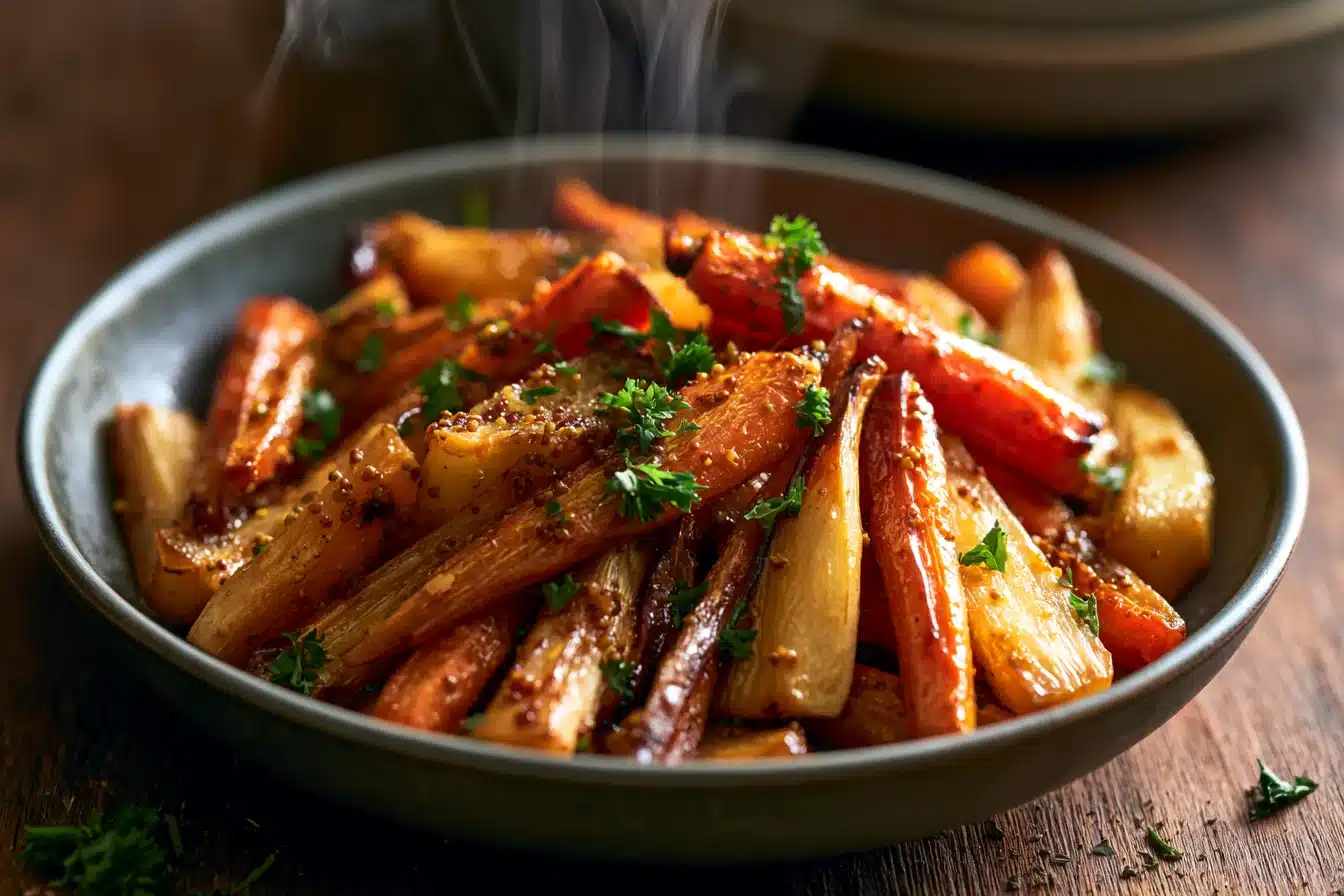
Once roasted to golden perfection, remove the Honey Mustard Roasted Carrots and Parsnips from the oven. Taste and adjust seasoning if necessary. Garnish with fresh chopped parsley or chives for an added burst of color and herbaceous freshness. Serve immediately and watch them disappear!
Nutritional Information
Beyond their irresistible flavor, these Honey Mustard Roasted Carrots and Parsnips are packed with beneficial nutrients. Based on a serving size of approximately 1 cup (assuming 6 servings per recipe), here’s a general nutritional breakdown:
- Calories: ~180-200 kcal
- Protein: ~2-3g
- Carbohydrates: ~30-35g (including natural sugars from honey and vegetables)
- Dietary Fiber: ~6-8g (contributing to digestive health and satiety)
- Total Fat: ~7-9g (mostly healthy monounsaturated fats from olive oil)
- Saturated Fat: ~1g
- Vitamin A: Excellent source (over 100% DV from carrots, crucial for vision and immune function)
- Vitamin C: Good source (from parsnips and carrots, an antioxidant)
- Potassium: Significant amount (supports blood pressure regulation)
- Manganese: Good source (important for bone health and metabolism)
Data Insight: Parsnips, often overlooked, provide a notable amount of soluble fiber and vitamin C, complementing carrots’ high beta-carotene content. This pairing offers a broader spectrum of micronutrients than either vegetable alone.
Healthier Alternatives for the Recipe
Want to tweak this recipe to fit specific dietary needs or health goals? Here are some simple, delicious modifications:
- Vegan-Friendly: Easily make this recipe vegan by swapping honey for maple syrup or agave nectar. The flavor profile remains equally delightful!
- Low-Carb/Keto-Friendly: Carrots and parsnips are higher in carbs than some other vegetables. To reduce carb content, consider replacing half the carrots/parsnips with lower-carb options like radishes, turnips, or even celeriac. Adjust roasting times accordingly.
- Reduced Sugar: If you’re mindful of sugar intake, you can reduce the amount of honey by half (to 1 tablespoon) or even replace it with a sugar-free syrup alternative, though this may slightly alter the caramelization.
- Oil-Free Option: For an oil-free version, consider using a vegetable broth or apple cider vinegar as the liquid base for your glaze, though the texture and caramelization will differ slightly.
- Spice It Up: Add a pinch of red pepper flakes for a subtle kick, or a dash of smoked paprika for a deeper, earthier flavor profile.
Serving Suggestions
The beauty of Honey Mustard Roasted Carrots and Parsnips lies in their versatility. They effortlessly elevate any meal!
- Classic Pairing: Serve alongside roasted chicken, turkey, or pork loin. The sweetness and tang perfectly complement savory meats.
- Hearty Vegetarian Meal: Pair with a lentil loaf, quinoa salad, or a robust mushroom steak for a satisfying plant-based dinner.
- Breakfast/Brunch Side: Surprising, right? These can be a delightful addition to a Sunday brunch spread, alongside scrambled eggs and crispy bacon.
- Salad Topper: Let them cool slightly and add them to a green salad for a warm, flavorful component.
- Holiday Feast: A must-have for Thanksgiving, Christmas, or Easter. Their vibrant color and crowd-pleasing flavor make them a festive favorite.
- With Grains: Toss with couscous, farro, or rice for a complete and wholesome grain bowl.
Presentation Tip: Arrange the roasted vegetables on a white platter to make their vibrant colors truly pop. A sprinkle of fresh herbs just before serving adds a professional touch.
Common Mistakes to Avoid
Even simple recipes can have pitfalls. Here are 3-5 common mistakes when making Honey Mustard Roasted Carrots and Parsnips and how to steer clear of them:
- Overcrowding the Baking Sheet: This is arguably the most common error. When vegetables are packed too tightly, they steam instead of roast, leading to soggy, pale results instead of beautifully caramelized, tender-crisp ones. Always use two baking sheets if necessary to ensure a single layer.
- Unevenly Cut Vegetables: If your carrots and parsnips are cut into varying sizes, some pieces will burn while others remain raw. Aim for uniform 2-inch chunks or sticks for consistent cooking. This single factor can impact cooking time by up to 10-15 minutes.
- Forgetting to Toss Mid-Roast: While not strictly mandatory, tossing the vegetables halfway through ensures even browning and caramelization on all sides. Skipping this step might result in one side being more roasted than the other.
- Insufficient Seasoning: Don’t be afraid of salt and pepper! Root vegetables can handle a good amount of seasoning. Taste a small piece once roasted and adjust if needed. Bland vegetables are a missed opportunity.
- Not Lining the Baking Sheet: The honey-mustard glaze can get wonderfully sticky and caramelized, which is great for flavor but not so great for cleanup. Parchment paper is your best friend here, preventing sticking and making washing up a breeze.
Storing Tips for the Recipe
If by some miracle you have leftovers of these delicious Honey Mustard Roasted Carrots and Parsnips, here’s how to store them to maintain freshness and flavor:
- Refrigeration: Allow the roasted vegetables to cool completely to room temperature (this prevents condensation, which can lead to sogginess). Transfer them to an airtight container and refrigerate for up to 3-4 days.
- Freezing: While possible, freezing roasted root vegetables can sometimes alter their texture, making them a bit softer upon reheating. If you wish to freeze, spread the cooled vegetables in a single layer on a baking sheet and freeze until solid. Then transfer to a freezer-safe bag or container. They can be stored for up to 1-2 months.
- Reheating: For best results, reheat in the oven at 350°F (175°C) for 10-15 minutes, or until heated through and slightly re-crisped. You can also microwave them, but they might lose some crispness. From frozen, you can reheat directly in the oven, increasing the cooking time.
- Make Ahead: You can prepare the vegetables (peel and chop) and even whisk the glaze up to 24 hours in advance. Store the chopped vegetables in an airtight container in the fridge, and the glaze separately. Toss and roast when ready.
Proper storage is key to reducing food waste, which globally accounts for a significant environmental impact. By planning and storing effectively, you’re not just saving food, you’re contributing to a more sustainable kitchen.
Conclusion
From the moment you start chopping to that first sweet and savory bite, our Honey Mustard Roasted Carrots and Parsnips recipe offers a truly satisfying culinary journey. We’ve explored how simple ingredients, combined with a little strategic effort, can transform everyday root vegetables into a dish that’s bursting with flavor, rich in nutrients, and incredibly versatile. Whether you’re seeking a vibrant weeknight side, a festive holiday staple, or a healthy addition to your meal prep, this recipe delivers on all fronts.
Remember the critical steps: uniform chopping for even cooking, avoiding an overcrowded baking sheet for perfect caramelization, and not shying away from proper seasoning. These small details make a big difference, ensuring your Honey Mustard Roasted Carrots and Parsnips come out tender, sweet, and delightfully savory every single time. It’s more than just a recipe; it’s an opportunity to embrace the joy of delicious, wholesome cooking.
Now it’s your turn! I encourage you to try this recipe and experience the magic for yourself. What are your favorite root vegetable pairings, or perhaps a unique twist you’d add to the honey mustard glaze? Share your thoughts, tips, and triumphs in the comments below – we’d love to hear from you! You might also enjoy our Garlic Herb Roasted Potatoes for another fantastic side dish idea.
FAQs
What kind of parsnips should I use for this recipe?
Look for firm, unblemished parsnips that are medium in size. Larger parsnips can sometimes have a tough, woody core that you might need to remove before roasting for the best texture.
Can I use baby carrots instead of regular carrots?
Absolutely! Baby carrots work wonderfully and save on prep time since they often don’t need peeling or chopping. Just adjust the roasting time slightly, as they may cook a bit faster.
Is it possible to make this recipe spicy?
Yes! To add a kick, you can include a pinch of red pepper flakes in the honey mustard glaze. Alternatively, a small amount of sriracha or hot sauce can be mixed in for an extra layer of heat.
My vegetables aren’t getting crispy, what went wrong?
The most common culprit is overcrowding the baking sheet. Ensure your vegetables are spread in a single layer with some space between them. Also, make sure your oven is preheated to the correct temperature and avoid opening the oven door too frequently, which can lower the temperature.
Can I prepare the glaze ahead of time?
Yes, you can whisk together the honey mustard glaze up to 2-3 days in advance and store it in an airtight container in the refrigerator. Just give it a good stir before tossing it with your vegetables.
What if I don’t have fresh thyme?
No problem! You can substitute 1/2 teaspoon of dried thyme for 1 teaspoon of fresh. If you don’t have thyme, dried rosemary or even Italian seasoning can offer a different but equally delicious aromatic note.
Can I add other vegetables to this dish?
Definitely! This recipe is very adaptable. Try adding sweet potatoes, butternut squash, or even Brussels sprouts. Just ensure they are cut to a similar size and that the baking sheet isn’t overcrowded to allow for even roasting.